Author: Mahesh Patil, a contributor to Google Summer of Code 2025
GSoC project link
The Accord Project’s Template Playground serves as a critical tool for drafting, testing, and executing smart legal contracts. As the platform has evolved, its user interface has grown increasingly complex and tightly coupled with legacy styling practices, creating significant challenges for both developers and end users.
This project aims to comprehensively restructure the Playground’s layout and component architecture while implementing strategic performance optimizations. Our goal is to establish a modern, modular foundation that enhances user experience, simplifies development workflows, and positions the platform for sustainable long-term growth.
The Template Playground has evolved into a powerful platform for smart legal contract development. Building on recent successful modernization efforts, including the implementation of split-panel layouts and AI chat integration (PR #396), we have an exciting opportunity to further elevate the platform to meet evolving user needs and technological standards.
- Expand upon the successful split-panel architecture already implemented with PanelGroup components
- Enhance the existing dynamic workspace structure to support even more flexible user customization
- Leverage the newly integrated Tailwind CSS system to establish a comprehensive design system
- Extend the current component restructuring work to include additional UI elements
- Build upon existing performance optimizations from dynamic loading strategies (PR #131)
- Expand the AI Assistant integration already established to include more sophisticated workflows
- Enhance the current split-panel system with additional customization options
- Prepare for seamless integration of upcoming collaborative features
- Building on proven dynamic loading strategies already implemented, which introduced dynamic imports for markdown processing libraries
- Extend successful code-splitting approaches to additional components beyond the current implementation
- Optimize the existing PanelGroup structure for even better performance and user experience
This modernization initiative will unlock significant value:
- For End Users: Faster, more intuitive interactions with customizable layouts that adapt to individual workflows as per their needs.
- For Contributors: Streamlined development experience with clear architectural patterns, comprehensive documentation, and modern tooling that accelerates feature delivery
This project proposes a systematic UI and architecture transformation focused on three core principles: flexibility, modularity, and performance. The solution encompasses four key areas of improvement:
- Enhance the existing PanelGroup implementation from PR #396 with advanced customization features
- Current Foundation: Successfully implemented split-panel architecture with resizable panes
- Next Evolution: Add multi-layout presets, saved workspace configurations, and context-aware panel behavior
- Expand the current AI chat panel integration to include comprehensive sidebar navigation
- Intelligent Panel Management: Context-aware panel visibility and automatic layout optimization
- Build upon the component restructuring already initiated in the layout PR
- Enhanced Components:
- Evolve existing editor containers (AgreementData.tsx, TemplateMarkdown.tsx, TemplateModel.tsx) with better performance patterns
- Leverage the newly integrated Tailwind CSS system to create a comprehensive design system
- Establish advanced component variants and theming capabilities
- Create reusable design patterns that extend beyond current implementation
- Code Splitting: Implement dynamic imports for Monaco Editor and heavy components
- Lazy Loading: Load preview panels and console only when actively needed
- Bundle Optimization: Reduce initial bundle size through strategic module splitting
- Strategic memoization of high-frequency components (
React.memo,useMemo,useCallback) - Implement virtual scrolling for large template lists and console outputs
- Optimize render cycles through proper dependency management
- Eliminate prop-drilling patterns that cause unnecessary re-renders
- Implement selective subscriptions for component-specific state updates
- Design plugin-ready architecture for seamless feature integration
- Establish clear API boundaries for upcoming features:
- AI-powered contract assistance
- Real-time collaborative editing
- Advanced configuration panels
- Custom theming and branding
- Implement context-aware pane management
- Preserve user preferences for layout configurations
- Enable seamless transition between different workflow modes
- Responsive Design: Seamless functionality across desktops and tablets
- Intuitive Interface: Drag-and-resize panes with persistent user preferences
- Faster Interactions: Reduced loading times and smoother animations
- Clean Architecture: Clear separation of concerns between styling, logic, and layout
- Reduced Complexity: Simplified component hierarchy with predictable data flow
- Enhanced Maintainability: Comprehensive testing coverage and clear documentation
- Faster Development: Reusable components and standardized patterns
- 50%+ reduction in initial page load time through code-splitting and lazy loading
- 30%+ decrease in bundle size via tree-shaking and optimization
- Improved Core Web Vitals: Better LCP, FID, and CLS scores
- Reduced Memory Usage: Optimized re-render patterns and memory leak prevention
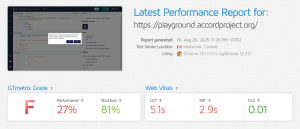
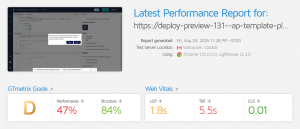
- Before: View Report
- After: View Report
- AI Integration Ready: Dedicated interfaces and workflows for AI-powered features
- Theming Capability: Flexible styling system supporting custom branding
- Plugin Ecosystem: Extensible architecture for third-party integrations
- PR #396 –
feat(ui): restructure split panel layout and add AI chat panel - Major layout restructuring with PanelGroup implementation and AI integration foundation - PR #384 –
chore(setup): Configuring Tailwind CSS - PR #379 –
refactor(layout): remove footer component from layout structure - PR #131 –
perf(store:vite config): Improvements for Dynamic Loading and Bundle Optimization - Performance optimizations with dynamic imports and Vite configuration enhancements
Draft
- PR #115 –
Draft PR exploring Template Playground New Design
This restructure establishes the Template Playground as a modern, extensible platform ready for the next generation of smart contract development tools. By prioritizing architectural soundness over quick fixes, we ensure that future enhancements whether AI-powered assistance, collaborative editing, or advanced visualization tools can be integrated seamlessly without compromising system stability.
The project’s success will be measured not only by immediate performance improvements but also by the platform’s ability to evolve and adapt to the changing needs of the legal technology landscape.
I would like to thank my mentors Timothy Tavarez and Diana Lease for their guidance and support throughout this project. Special thanks to Sanket Shevkar for his helpful code reviews and for making my GSoC journey smoother.